

Germany and Kenya Seal Historic KSh 7.8 Billion Development Cooperation Agreement to Drive Labor Mobility and Clean Energy Assets
Solidifying a profound diplomatic and macroeconomic partnership aimed at shifting bilateral cooperation away from traditional development aid toward structured reciprocal economic integration, Germany and Kenya have signed a landmark KSh 7.8 billion development cooperation agreement.
Spanning the 2026 to 2028 operational window, the comprehensive bilateral pact integrates digital transformation initiatives, localized technical education, labor mobility pathways, and green energy asset deployment into a unified economic strategy. Beyond the core funding framework, the German Federal Ministry for Economic Cooperation and Development (BMZ) is finalizing a secondary KSh 4 billion capital injection dedicated exclusively to modernizing Kenya’s geothermal and renewable energy distribution networks. By creating formal channels to export pre-vetted Kenyan tech and engineering talent to European industrial centers while funding domestic green power production, the treaty establishes a powerful model for balanced, non-debt sustainable growth.
The signing of this multi-billion-shilling cooperation framework transitions German-Kenyan economic ties away from standard donor-funded public health programs into high-value industrial technology transfers, spectrum development, and strategic human capital pipelines. As European industrial economies face systemic domestic labor shortfalls, partnering with Africa’s premier tech capital allows Germany to secure a reliable stream of skilled young technicians while financing the clean energy assets required to drive Kenya's light manufacturing expansion.
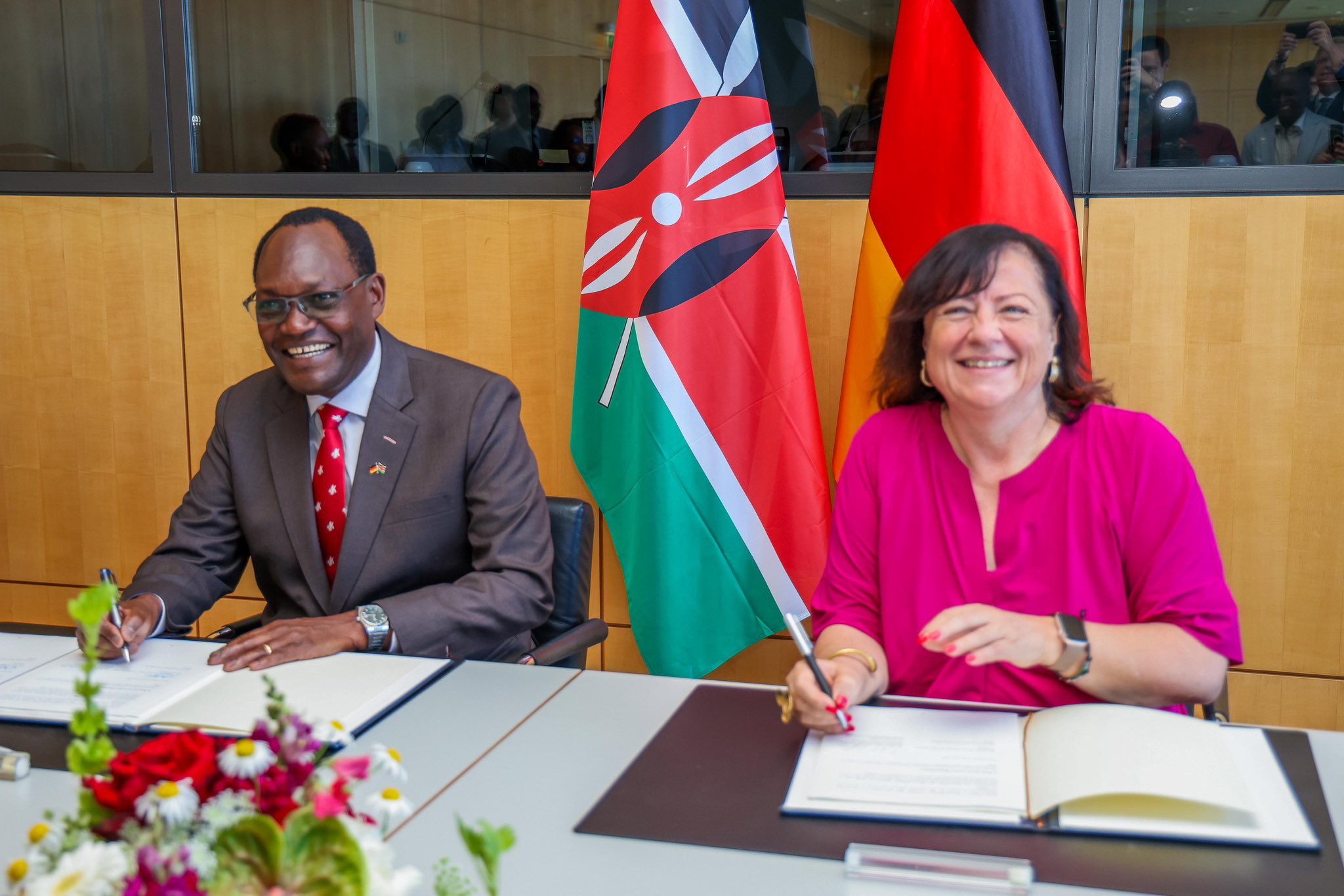
The core operational tracks, funding distributions, and strategic priorities driving this bilateral development agreement focus on four central areas:
Structuring Managed Labor Mobility Pathways for Skilled Technical Professionals: The centerpiece of the agreement sets up transparent, fast-track visa and licensing frameworks to place pre-vetted Kenyan engineers, software developers, and healthcare workers into the German industrial market. This organized labor pipeline ensures fair working conditions while establishing steady remittance flows back into the local economy.
Upgrading Vocational Education and Technical Training Centers to Match Global Rules: To feed the international labor pipeline and support local manufacturing hubs, the funding upgrades equipment across select national polytechnics. Standardizing curricula according to European industrial metrics guarantees that Kenyan graduates possess immediately employable, internationally recognized certifications.
Injecting Four Billion Shillings into Geothermal and Grid Transmission Infrastructure: The targeted clean-energy funding accelerates the development of new geothermal wells in the Rift Valley and modernizes regional electricity grids. Upgrading these distribution lines ensures that local manufacturing zones receive uninterrupted baseload green power, lowering operating costs for industrial corporations.
Financing Digital Transformation and Grassroots Private Sector Development Modules: The facility channels grant capital into building constituency innovation hubs, digital registries, and e-government portals across rural counties. Streamlining these digital administrative networks lowers setup friction for small businesses, boosting internal trade velocity.
Bilateral technical committees and diplomatic trade envoys are currently setting up the execution panels in Nairobi, aiming to clear the first cohort of labor mobility candidates and energy project contracts before the close of the current mid-year legislative cycle.

Why this matters: For the national economy, this KSh 7.8 billion German cooperation treaty serves as an Accelerator for High-Value Remittances and a Catalyst for Green Infrastructure Capital. Attracting large-scale, non-debt grant backing for renewable energy grids and tech skilling expands the country's national economic output, builds high-tier engineering capacity, and reduces reliance on expensive commercial sovereign borrowing, keeping fiscal indices stable.
For the strategist, the Germany-Kenya development agreement represents the Sovereignty of Human Capital Exportation and Clean Energy Autonomy. It proves that constructing an unshakeable, 100-year institutional footprint requires a nation to build reciprocal, high-value trade treaties with global economic anchors—utilizing our demographic strengths and green energy advantages to secure external investments, protect domestic markets, and command our geopolitical space on our own terms.
Opportunity sector:
B2B Technical Talent Outsourcing, International Labor Placement & Visa Advisory: Massive openings for specialized human resource firms to manage compliance testing and placement protocols for Europe-bound professionals.
Geothermal Civil Engineering Contracting, Grid Installation & Heavy Hardware Supply: High demand for industrial construction companies to secure subcontracting lines for geothermal field expansion and transmission line builds.
Vocational Curriculum Customization, Technical Training Software & Lab Equipping: Significant opportunities for educational consultants and equipment manufacturers to supply standardized testing tools to domestic polytechnics.
Digital Transformation Consultation, Enterprise Software Setup & E-Gov APIs: A rising commercial market for local tech providers to build automated digital portals for county governments and small business registries.
Cross-Border Remittance Fintech Bridges, Multi-Currency Wallets & Low-Cost Transfers: Opportunities for financial tech firms to create secure, direct euro-to-shilling remittance applications tailored for overseas workers.
Moto Seen Africa ~ Africa's View, Seen Clearly
#SiliconSavannah #MotoSeenAfrica #Vision100 #AfricasView #SeenClearly #BilateralTrade #GermanyKenya #LaborMobility #RenewableEnergy #TechnicalSkilling #BMZ
SHAHID YAKUB
Seen Africa Newsroom


